IPESG operates as a global scholarly initiative that draws on the active and diverse community of the Earth System Governance Research Alliance, bringing together academics from across regions and social science disciplines. Its assessment community consists of Coordinating Lead Authors, who provide intellectual leadership and overall responsibility for each assessment domain; Lead Authors, who develop specific sections; and Contributing Authors, who conduct the systematic assessment of the literature. In constituting its author teams, IPESG ensures diversity in terms of geography, gender, disciplinary background and methodological approaches.
Chair
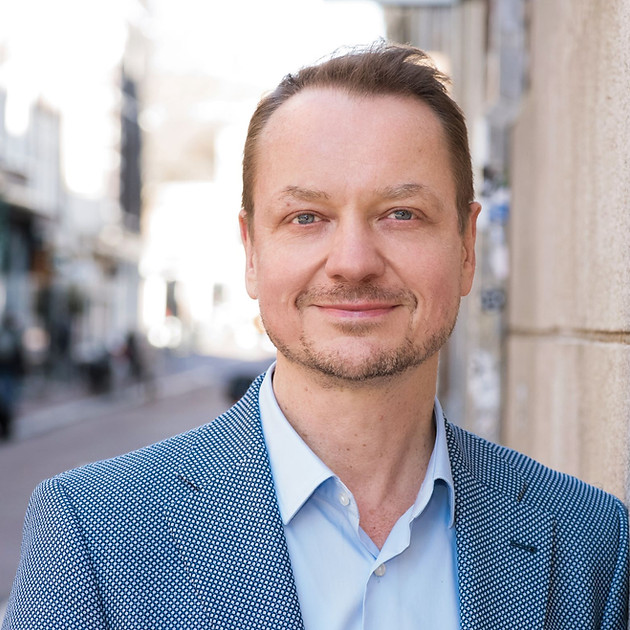
Frank Biermann
Utrecht University, The Netherlands
Frank Biermann is a research professor of Global Sustainability Governance at Utrecht University in the Netherlands. He is the founding chair of the Earth System Governance Project, founding editor of the Earth System Governance journal, and has just completed a 2.5 million EUR research programme on the steering effects of the Sustainable Development Goals, funded by the European Research Council. Among other honours, he has received an honorary doctorate from Lund University and the Distinguished Scholar in Environmental Studies award from the International Studies Association. In 2024, he became the first political scientist to win the Volvo Environment Prize, ‘for defining new pathways for international environmental governance in a period of global change’.
Coordinating Lead Authors
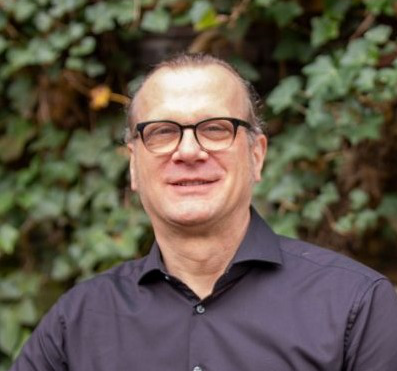
Steffen Bauer
German Institute for Development and Sustainability, Germany
Steffen Bauer is a senior researcher with the German Institute for Development and Sustainability in Bonn, Germany. As a political scientist with the ‘Environmental Governance and Transformation to Sustainability’ programme, Bauer heads the project ‘Klimalog: Research and dialogue for a climate-smart and just transformation’. His research addresses questions of international organizations, global environmental governance and sustainable development with a special interest in the role of the United Nations and a regional focus on Africa. His current work is concerned, in particular, with geopolitical and development implications of international climate policy, the 2030 Agenda for Sustainable Development as well as transformative dynamics and related concerns of equity and justice in the context of global environmental change.

Steven Bernstein
University of Toronto, Canada
Steven Bernstein is distinguished professor of Global Environmental and Sustainability Governance in the Department of Political Science and co-director of the Environmental Governance Lab at the University of Toronto, Canada. His research spans the areas of global governance and institutions, global environmental politics, international political economy, and policy studies. He has published five authored or edited books, including most recently Norms, Practices and Social Change in Global Politics (Cambridge University Press), and over 95 scholarly articles and book chapters. His current research projects investigate transformative policies and initiatives to achieve decarbonization, coherence and incoherence in global sustainability governance, and change and transformation in international relations and global environmental politics in theory and practice. He also holds an Honorary Doctorate from the University of Copenhagen.

Louise Du Toit
University of Southampton, United Kingdom
Louise du Toit is lecturer in Law at the University of Southampton, United Kingdom, where she teaches on environmental law and sustainability related modules. Her research focuses on strengthening environmental law and governance to respond to current earth system challenges, including climate change, stratospheric ozone depletion, and plastics. Du Toit is a senior research fellow of the Earth System Governance Project and a member of its Taskforce on Earth System Law. She is also associate editor of Earth System Governance journal and assistant editor of the journal Transnational Environmental Law. Du Toit holds a PhD in Public Law and an LLM in Environmental Law from the University of Cape Town, and she is an admitted attorney of the High Court of South Africa.

Aarti Gupta
Wageningen University & Research, The Netherlands
Aarti Gupta is professor of Global Environmental Governance with the Environmental Policy Group, Department of Social Sciences, Wageningen University, the Netherlands. Her research focuses on global environmental and climate governance, including questions of transparency and accountability, and anticipatory governance of novel technologies (biotechnology and climate engineering). She has published extensively on these topics, including the co-edited volume Transparency in Global Environmental Governance: Critical Perspectives (2014, MIT Press). Within the Earth System Governance Project, she has been a lead faculty member since 2014, a member of the Scientific Steering Committee from 2018 to 2025 and co-chair of this committee from 2022 to 2023. She was one of the five coordinating lead authors of the second Earth System Governance Science and Implementation Plan, launched in 2018. She is the series co-editor of the Cambridge Elements in Earth System Governance series and was associate editor of the journal Global Environmental Politics from 2012 to 2020.
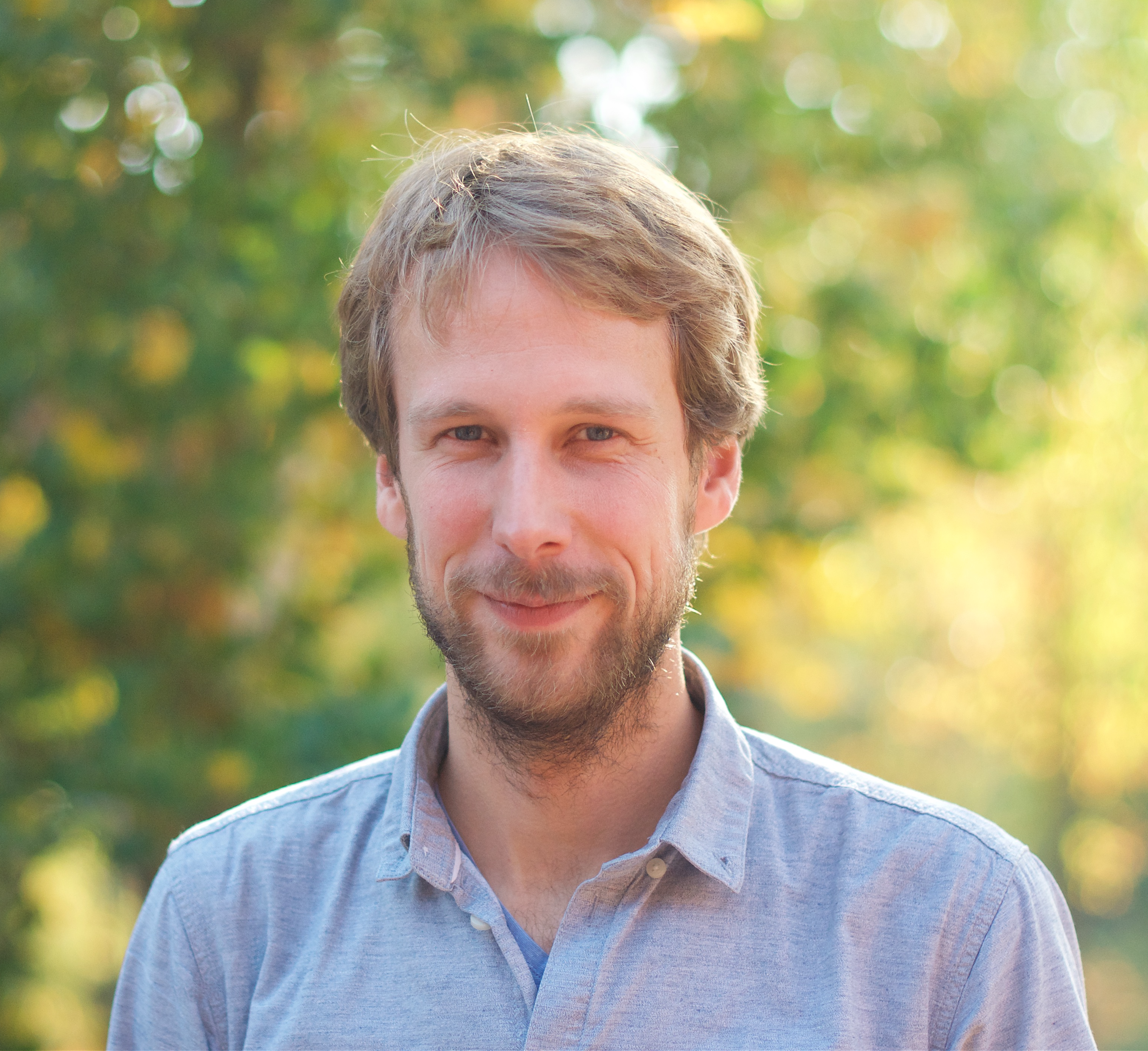
Thomas Hickmann
Lund University, Sweden
Thomas Hickmann is an associate professor at the Department of Political Science of Lund University in Sweden. His overriding scholarly motivation is to advance knowledge on the global governance of transboundary sustainability challenges. He is especially intrigued by the question of how societies can deal with global common goods and which institutions need to be in place to overcome collective action problems, such as climate change, biodiversity loss and land degradation to promote global sustainability and peace. His main research interests include multi-level governance dynamics in the global endeavour to achieve sustainable development, public and private authority in global environmental politics, and the role of cities and transnational actors in climate policy. He has various academic leadership roles and tasks in international and national scientific bodies and published highly policy relevant findings in key journals (Ambio, Global Sustainability, International Studies Review, Nature Sustainability, Science) and publishing houses (Cambridge University Press and Routledge).
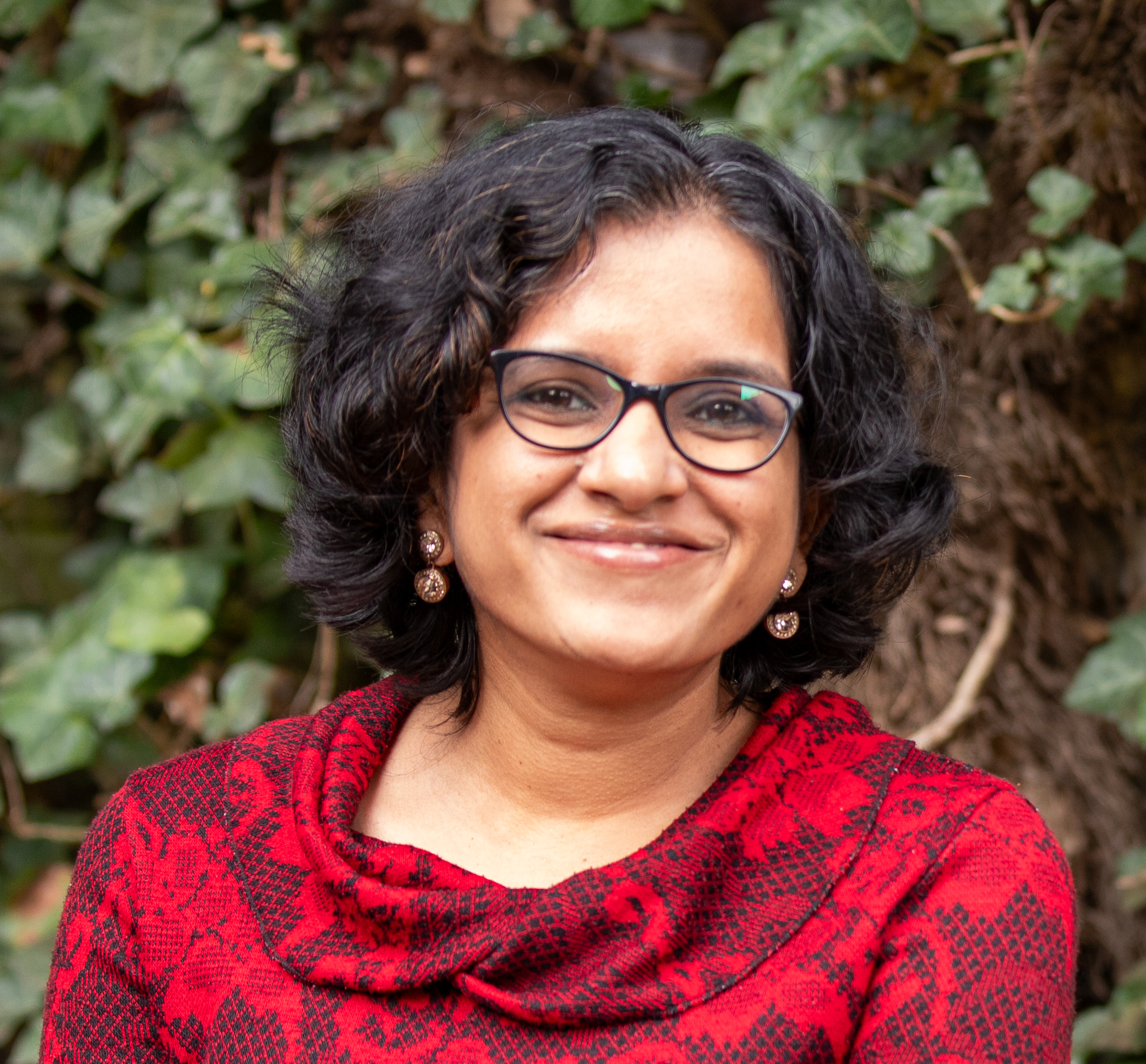
Dhanasree Jayaram
Manipal Academy of Higher Education, India
Dhanasree Jayaram is a senior assistant professor in the Department of Geopolitics and International Relations, Manipal Institute of Social Sciences, Humanities and Arts, and the co-coordinator of the Centre for Climate Studies, Manipal Academy of Higher Education, India. She is also a senior research fellow and a member of the Scientific Steering Committee of the Earth System Governance Project, a member of the Climate Security Expert Network, a research fellow of the Centre for Public Policy Research, a non-resident fellow of the Finnish Institute of International Affairs, a visiting fellow of the Institute of Peace and Conflict Studies; and an associate of the Network for Education and Research on Peace and Sustainability at Hiroshima University. Her research areas include environmental and climate security, climate diplomacy, environmental geopolitics in Southern Asia, Indo-Pacific and polar regions, gender and climate governance, and geopolitical and security implications of solar geoengineering.

Mikael Karlsson
Uppsala University, Sweden
Mikael Karlsson leads the Climate Change Leadership Research Unit at Uppsala University, Sweden, and is the executive director of the International Office of the Earth System Governance Project. His research focuses on environmental governance, particularly climate policy. He has published over 70 peer-reviewed articles, numerous reports and books, and hundreds of popular texts. He has extensive experience contributing to public inquiries, advisory boards and expert groups at national and international levels.

Rakhyun E. Kim
Utrecht University, The Netherlands
Rakhyun E. Kim is associate professor of Earth System Governance at the Copernicus Institute of Sustainable Development, Utrecht University, The Netherlands. Trained as an interdisciplinary scholar, with a PhD from the ANU Fenner School, Kim works at the intersection of global environmental governance and international environmental law. A central theme of his work is the mismatch between existing institutional arrangements and earth system dynamics. Kim is the Principal Investigator of a five-year European Research Council Starting Grant project on ‘problem shifting’ between international environmental treaty regimes. Within the Earth System Governance Project, he co-leads the Taskforce on Earth System Law. He has contributed to major international science–policy processes, including the United Nations Environment Programme’s Global Environment Outlook (2019) and the United Nations World Ocean Assessment (2026).

Louis Kotzé
Wageningen University and Research, The Netherlands
Louis Kotzé is a professor and chair of the Law Group at Wageningen University and Research, The Netherlands. Before, he has been a full-time academic at the Faculty of Law, North-West University in South Africa for over 23 years. His research and teaching broadly encompasses five interrelated themes that he approaches from a transnational, comparative and international perspective: international environmental law; human rights and the environment; the Sustainable Development Goals; law and governance for the Anthropocene; and earth system law. He has engaged in several collaborative North-South and other research projects, and generated approximately 185 publications related to these themes over the past twenty years, including three monographs and 15 edited volumes. He was also a programme chair with The New Institute in Hamburg, Germany, where he led a project titled Governing the Planetary Commons until July 2024.
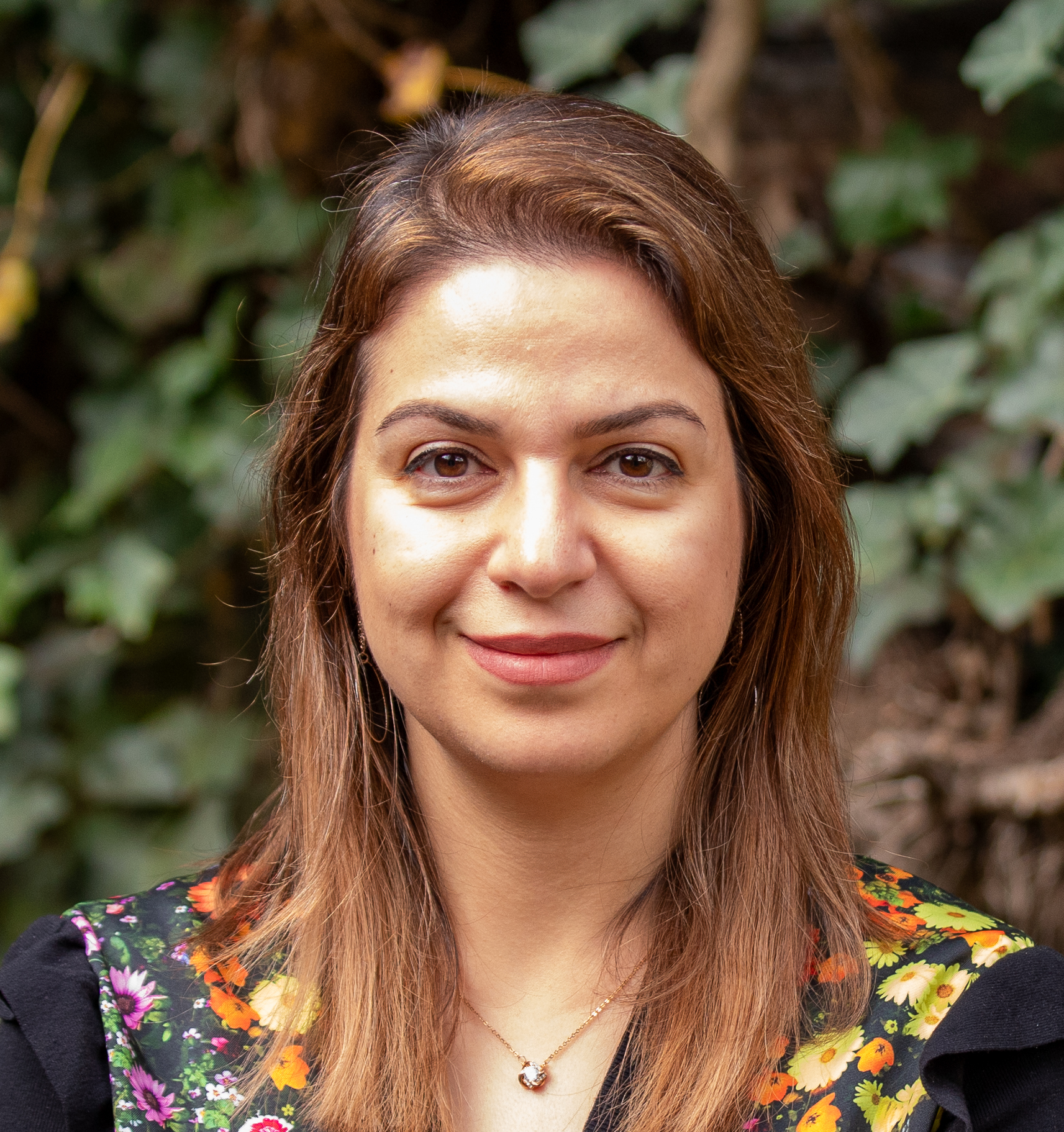
Shirin Malekpour
Monash University, Australia
Shirin Malekpour is associate professor in Sustainability Governance at Monash University, Australia. As a social scientist, her work is dedicated to improving long-term policy making and governance for sustainable development. In recent years, her research has centred on governance through goals, exploring the potential of goal-based frameworks (such as the Sustainable Development Goals) to drive policy and institutional change. She has led complex transdisciplinary programmes on localizing the SDGs, collaborative governance, futures thinking and scenario planning, and published in renowned journals such as Nature, Nature Sustainability and Science. Malekpour is a scientific advisor to the United Nations on sustainable development. She was appointed by the UN Secretary-General as one of the 15 members of the Independent Group of Scientists, tasked with writing the 2023 Global Sustainable Development Report. In 2018, she was recognized as one of the top 25 young scientists in the world in the field of sustainable development and received the international Green Talents award.

Ayşem Mert
Stockholm University, Sweden
Ayşem Mert is an associate professor of Environmental Politics at Stockholm University, Sweden. Her work focuses on critical approaches to the Anthropocene; future-making and sustainability futures; discourses of crises, democracy and environment from local to global levels; and public-private cooperation in earth system governance. She uses psychoanalytic and interpretive methods, especially political discourse theory and critical fantasy studies, and collaborates with artists and stakeholders in transdisciplinary projects to better understand relationships of more-than-human naturecultures. Her recent research project is on communities that experienced wildfires, asking how lived experiences of extreme fires influence the way communities imagine, narrate and act upon their environmental relations and futures. She takes part in the Earth System Governance Project through editorial responsibilities in its Working Papers series, the Earth System Governance journal, and as co-convenor of the Democracy Working Group of the Earth System Governance Project.

Manjana Milkoreit
University of Oslo, Norway
Manjana Milkoreit is a researcher at the University of Oslo’s Department of Sociology and Human Geography, Norway. Her research integrates political science, futures research and cognitive theory to study actor motivations, agency and institutional effectiveness related to global climate change governance. She is interested in challenges at the science-policy-society interface, including the role of scientific knowledge in environmental decision-making and public risk perceptions related to climate change. Currently, her research focuses on imagination and long-term governance with the European Research Council-funded project CAMELOT, and the governance of earth system tipping points. She is the author of Mindmade Politics: The Cognitive Roots of International Climate Governance (MIT Press, 2017) and a co-lead author of the Global Tipping Points Reports 2023 and 2025.

Chukwumerije (Chuks) Okereke
University of Bristol, United Kingdom
Chukwumerije Okereke is professor in Global Governance and Public Policy at the University of Bristol, United Kingdom, and the director of the Centre for Climate Change and Development in Alex Ekwueme Federal University, Ebony State, Nigeria. He is also a visiting professor at University of Reading, and senior academic visitor at the Oxford University Centre for the Environment. His specialism is climate justice, corporate climate strategies and green economy transition in Africa. He was Lead Author in IPCC’ fifth assessment report, and its special report on ‘1.5’; and he is the coordinating lead author of Chapter 1 in the IPCC’ sixth assessment cycle Working Group III. Over the last twenty years, he has maintained an extensive high-impact engagement with national governments, businesses and NGOs in Africa and led on several high-profile international projects on climate change policy, mainstreaming and green economy transition in Africa.

Susan Park
University of Sydney, Australia
Susan Park is professor of Global Governance in Government and International Relations at the University of Sydney, Australia. She focuses on how international organizations and global governance can become greener and more accountable, particularly in the transition to renewable energy. Her most recent books are: The Good Hegemon (2022, Oxford University Press) and Environmental Recourse at the Multilateral Development Banks (2020, Cambridge University Press). She is co-lead editor of the journal Global Environmental Politics. She is an alumni Senior Hans Fischer Fellow at the Technical University of Munich and a lead faculty member of the Earth System Governance Project.

Jonathan Pickering
University of Canberra, Australia
Jonathan Pickering is an associate professor in the Canberra School of Government at the University of Canberra, Australia, where he teaches politics, international relations and public policy. From 2015 to 2019 he was a postdoctoral fellow at the University of Canberra, based at the Centre for Deliberative Democracy and Global Governance. His research focuses on democracy and justice in environmental and energy governance. He co-authored with John Dryzek the book The Politics of the Anthropocene (2019), published by Oxford University Press. His research has been published in a range of journals including Climate Policy, Earth System Governance, Environmental Politics, Global Environmental Politics and World Development. Pickering has been a research fellow of the Earth System Governance Project since 2015, a member of the project’s Scientific Steering Committee since 2018, and a co-chair of the Committee since 2023. He was a lead author of the project’s 2018-2028 Science and Implementation Plan, and from 2016 to 2022 he co-convened the Project’s Working Group on Democracy.

Florian Rabitz
Kaunas University of Technology, Lithuania
Florian Rabitz is a chief researcher at the Research Group Civil Society and Sustainability of Kaunas University of Technology, and an associate professor at the Institute of International Relations and Political Science of Vilnius University, Lithuania. His work centres on the role of new and emerging technologies in global sustainability governance, with special emphasis on biotechnology, climate engineering, and outer space. Current research projects include transformative innovations for biodiversity and the implications of AI for ocean governance. Rabitz co-chairs the COST Action Futures-Oriented Governance of Outer Space and the Earth System Governance Taskforce on Earth-Space Governance. He also serves as an advisor to the Lithuanian Ministry of Environment and participates in various policy and expert activities on biotechnology, synthetic biology and digital sequence information under the Convention on Biological Diversity.

Dimitris Stevis
Colorado State University, United States of America
Dimitris Stevis is a professor of Political Science at Colorado State University, United States of America. His research, teaching and practice are integrated around the social governance of the world political economy in the areas of labour and the environment, with particular attention to power and just transitions. His work fuses academic research with political practice, including through the Global Peoples Platform for Socio-Ecological Transformation. Ongoing research examines just transition and care, just transition across the lithium lifecycle in the USA, and socio-ecological work (with Brendan Davidson). In April 2026 he chaired a global environmental justice conference at Colorado State University, and is co-convener of the Planetary Justice Taskforce of the Earth System Governance Project. Stevis is the author of Just Transitions: Promise and Contestation in the Cambridge Elements in Earth System Governance series (2023) and co-editor of The Palgrave Handbook of Environmental Labour Studies (2021, with Nora Räthzel and David Uzzell).

Yixin Sun
University of Bath, United Kingdom
Yixian Sun is a professor of Sustainability Governance at the University of Bath, United Kingdom and a UKRI Future Leaders Fellow. He studies transnational governance, environmental politics and sustainable development, with a focus on emerging economies. His work explains the changing role of China in global environmental governance. He is the author of Certifying China (MIT Press, 2022) and has published over 40 articles in high-impact scientific journals including Science, Nature Sustainability, Nature Food, and Global Environmental Change. He is currently leading two large projects funded respectively by UKRI on sustainability governance of China’s global infrastructure investments (£1.7 million) and UK FCDO (£2.5 million) on multi-level governance of forest-risk commodities. Sun is an editor of Global Environmental Politics, and also a member of the Scientific Steering Committee of the Earth System Governance Project.
Lead Authors
The list with Lead Authors will be published soon.
Contributing Authors
The list with Lead Authors will be published soon.
Secretariat

Max Van Deursen
Managing Director at the IPESG Secretariat & Postdoctoral researcher at Utrecht University

Matilda Petersson
Advisor at the IPESG Secretariat & Postdoctoral researcher at Stockholm University

Alicia Brandhorst
Intern, Scientific Support, IPESG Secretariat

Grace Contino
Intern, Scientific Events and Outreach, IPESG Secretariat

Sophia Wallisch
Intern, Scientific Support, IPESG Secretariat
Institutional partners
IPESG works in close partnership with several academic institutions and research organizations that support the Panel’s activities and contribute to its global reach.
Host of the IPESG Secretariat

Institutional partners


Supported by